Showing posts with label petroleum. Show all posts

Saturday, October 12, 2013

Study disputes gas leak concern on fracking

Hydraulic fracturing, also known as fracking, is a process of extracting natural gas or oil applying pressurized fluid deep into the ground so that fractures in rocks will be formed. This process increases rock permeability, which provides pathways for natural gas or oil to move upward.

Image Source: geology.com

At a certain extent, hydraulic fracturing generates concerns and contestation within the country and around the world. Some skeptical individuals and organizations hold their ground until other alternative techniques come up.

For instance, many fear that drilling for shale gas causes huge amounts of gas leaks into the air. However, The New York Times presents a study that contests this. Conducted by the University of Texas and supported by the Environmental Defense Fund and nine petroleum companies, the study reinforces the uses and advantages of hydraulic fracturing, as advocated by several groups that stand strong on their belief that shale gas is a better energy source than coal.

Image Source: news4jax.com

The study showed that fracking makes significantly smaller leaks of methane gas than the Environmental Protection Agency had estimated and shale gas detractors had thought. Furthermore, it stated that 99 percent of methane gas that escapes from new wells is captured through containment measures.

While the researchers of the study expect questions of objectivity, petroleum experts believe that the research and its proponents are reputable and reliable.

Image Source: processingmagazine.com

The oil and gas sector holds an unending interest among oil professionals, such as Dr. Ali Ghalambor. Find more materials about the industry by following this Twitter account.

Wednesday, July 3, 2013

Making people understand fracking

 Image Source: potomacriverkeeper.org


Hydrofracturing, or fracking as it is commonly known, is a controversial topic. Although many are skeptical about the practice, there are still those who believe that fracking is good for the country, especially since its end products are natural gas and shale gas—cheaply produced hydrocarbons that are also cleaner than traditional hydrocarbons, such as petroleum and coal. Moreover, fracking also contributes to the economy by creating hundreds of jobs. Conversely, skeptics believe that fracking is a dangerous process, wherein the fluids may trickle into underground fresh water reservoirs, which are sources of drinking water for most people.


Image Source: wellguy.hubpages.com


However, both beliefs are eclipsed by the fact that, according to a recent survey by the George Mason University Center for Climate Change, most people do not even know what fracking is.

Educating people about the pros and cons of fracking and making information about the practice readily available are important, as public opinion is crucial, especially now that there are different groups disagreeing on whether to subject a particular land to fracking or not. Furthermore, companies should be transparent with regard to the chemicals used, including the amounts, during the fracking process to help raise awareness on the advantages and disadvantages of this practice.


Image Source: vimeo.com


More pertinent news about the petroleum and natural gas industry can be found on this Twitter page for Dr. Ali Ghalambor.

Monday, May 13, 2013

Natural gas: Mother Earth's gift to society


Natural resources and fossil fuels, like natural gas, are a gift to mankind. The abundance of these fuels has resulted into today’s prosperous and modern society. The discovery of the ways to produce these fossil fuels has given the society a favor by elevating mankind from the abyss of stagnation, where people relied on primitive ways of living.


Image Source: cdiver.net


Meanwhile, as the world hastens the road to progress, the use of technologies, like modern turbines, solar panels, and nuclear plants, is vital. With this progress comes the burning of fossil fuels, which is crucial in providing power to these technological advancements.

Thankfully, the introduction of hydraulic fracturing, combined with horizontal drilling, helps in this respect. This method produces natural gas from shale rock formations.


Image Source: onpoint.wbur.org


Benefits of natural gas use in generating power

Because of the increased use of natural gas in the power generation sector, US has reduced its greenhouse gas emissions to 1994 levels.

Other good reasons for using natural gas include the impact it has on homes. With natural gas-powered appliances and amenities, a home will be a safe and comfortable environment to live in. Natural gas beats electricity on performance and cost. Being the cleanest source of energy from fossil fuels, natural gas promotes a green home without the harmful emissions to the air.


Image Source: news.nationalgeographic.com


Drs. Ali Ghalambor and Boyun Guo’s The Natural Gas Engineering Handbook offers a comprehensive discussion about natural gas production. More information on this topic can be accessed on this Twitter page.

Tuesday, April 23, 2013

Repost: Trucking Industry Is Set to Expand Its Use of Natural Gas

The New York Times recently reported that the trucking industry is set on switching from petroleum to cleaner burning natural gas - a move which may also benefit consumers if prices remain low:


The natural gas boom has already upended the American power industry, displacing coal and bringing consumers cheaper electricity.

Now the trucking industry, with its millions of 18-wheelers moving products like potato chips, underarm deodorant and copy paper around the country, is taking a leap forward in switching from petroleum to cleaner-burning natural gas. And if natural gas remains cheap, consumers may benefit again.

This month, Cummins, a leading engine manufacturer, began shipping big, new engines that make long runs on natural gas possible. A skeletal network of refueling stations at dozens of truck stops stands ready. Major shippers like Procter & Gamble, mindful of both fuel costs and green credentials, are turning to companies with natural gas trucks in their fleets.

And in the latest sign of how the momentum for natural gas in transportation is accelerating, United Parcel Service plans to announce in the next few days that it will expand its fleet of heavy 18-wheel vehicles running on liquefied natural gas, or L.N.G., to 800 by the end of 2014, from 112. The vehicles will use the new Cummins engines, produced under a joint venture with Westport Innovations.

U.P.S., like the rest of the industry, still has a long way to go in the conversion, but the company hopes to make natural gas vehicles a majority of its new heavy truck acquisitions in two years.

The company is benefiting from incentives provided by various states and the federal government, which offer tax credits and grants for installing natural gas fuel stations and using vehicles fueled by natural gas.

“By us doing this it will help pave the way and others will follow,” said Scott Wicker, chief sustainability officer at U.P.S.

“Moving into L.N.G. is a means to get us onto what we see as the bridging fuel of the future and off of oil,” he said. “It’s the right step for us, for our customers and for our planet.”

The move could also cut the country’s oil import bill. There are currently about eight million heavy and medium-weight trucks consuming three million barrels of oil a day while traveling the nation’s highways. That is nearly 15 percent of the total national daily consumption and the equivalent of three-fourths of the amount of oil imported from members of the Organization of the Petroleum Exporting Countries. Roughly two-thirds of the diesel used as transportation fuel nationwide feeds three million 18-wheelers, the main trucks hauling goods over long distances.

In the last four years, the natural gas shale drilling boom has produced a glut of inexpensive fuel, leading producers to argue that the country should wean its commercial and municipal transportation systems from a dependence on imported oil to domestically produced natural gas.

It is cheaper, saving truckers as much as $1.50 a gallon, and it burns cleaner, making it easier to meet emissions standards. The domestic fuel also provides some insulation from the volatile geopolitics that can drive up petroleum prices.

Still, manufacturers and fleet owners have been slow to switch, partly because natural gas vehicles can cost almost twice as much as conventional trucks and because only a few gasoline stations have the specialized equipment needed to dispense the fuel.

Now, as name-brand manufacturers and chains like Nike and Walmart have pressed for transportation of their goods by natural gas vehicles and companies like U.P.S., FedEx and Ryder System have started exploring the option, truck makers have begun bringing natural gas vehicles to the market. Major manufacturers, including Navistar and Volvo, have plans to offer long-haul natural gas vehicles.

Clean Energy Fuels — a company backed by the financier T. Boone Pickens and Chesapeake Energy — has peppered major routes with 70 stations, many at truck stops operated by Pilot Flying J. (The truck-stop company, whose chief executive is Jimmy Haslam, owner of the Cleveland Browns, is separately under investigation for potential rebate fraud.)

Clean Energy has plans to complete 30 to 50 more by the end of the year. Shell has an agreement to build refueling stations at as many as 100 TravelCenters of America and Petro Stopping Centers while ENN, a privately held Chinese company, hopes to build 500 filling stations as well.

That emerging network “really has changed the interplay between the shippers and the contracted carriers,” said Andrew J. Littlefair, Clean Energy’s chief executive. “The whole deal’s beginning to change.”

Though the network is growing rapidly, it has a long way to go. As of May 2012, only 53 L.N.G. fueling stations were in the United States, more than two-thirds concentrated in California, along with 1,047 compressed natural gas stations around the country, according to the Energy Department. In comparison, there were 157,000 fueling stations selling gasoline.

Vehicle use of natural gas in the United States is still negligible but it has been growing. Among fleets whose vehicles travel shorter routes, like transit buses, refuse haulers and delivery trucks, use of compressed natural gas is much further along. Last year, more than half of newly purchased garbage trucks ran on compressed natural gas.

The federal Energy Information Administration last year projected that if enough L.N.G. filling stations were built and economic conditions were right, sales of heavy-duty natural gas vehicles could increase to 275,000 in 2035, equivalent to 34 percent of new vehicle sales, from 860 in 2010. But estimates vary. Citigroup recently forecast that 30 percent of the heavy truck fleet would shift to natural gas by the end of the decade, but some in the transportation industry put that figure much lower.

L.N.G. trucking is slowly gaining traction internationally as well — especially in Canada and Europe — although conversion in the United States, where gas is relatively inexpensive, is expected to be faster. Trucking industry experts project that 5 percent of the European heavy trucking fleet could run on natural gas by 2015, rising to as much as 15 percent by 2020.

“Natural gas will be a part of that play in commercial vehicles, but our view is, it’s not going to replace diesel,” said Roe C. East, general manager of the natural gas business at Cummins. He added that natural gas could capture as much as 10 percent of the heavy-duty truck market in North America in the next five years.

One obstacle is cost. There are some tax incentives, and the Obama administration funneled stimulus money to various projects. ENN, the Chinese company, for instance, has teamed up with a small company now operating as Blu in Utah that used federal stimulus money to help open a natural gas fueling station in Salt Lake City in 2011.

But industry executives say that the incentives are not enough to get the system going and solve what Bill Logue, chief executive of the FedEx Freight Corporation, called the “chicken-and-egg dilemma” of which comes first, the trucks or the stations.

“We believe that public policy supporting the development of natural gas infrastructure is critical and should be prioritized,” he said in an e-mail message. “Individual drivers and private companies cannot realistically be expected to resolve the dilemma themselves.”

Another issue arises alongside the very appeal of the fuel: its low price.

Because natural gas is now in demand to meet so many different energy needs — including industrial electricity and home heating — prices could rise, as they have in recent months, especially if the Obama administration begins approving the fuel for export to countries where gas commands a much higher price, as some producers and lawmakers are pressing the Energy Department to do.

As U.P.S. executives explain it, the economics for the switch to natural gas are complex.

Prices for L.N.G. and diesel fuel vary around the country, so the company matches its L.N.G. trucks with states where it can get the lowest-cost gas on long-term contracts and the most generous grants. The rule of thumb, according to U.P.S., is that truck operators save 30 to 40 percent per mile driven on gas over diesel.

A big part of the equation is a 50-cent-per-gallon tax credit the federal government offers to companies that use L.N.G., but that is scheduled to expire at the end of the year.

(There are also federal taxes that work against gas use, including a 12.5 percent federal excise tax on new heavy trucks that is more onerous on L.N.G. vehicles because they are far more expensive.)

“The economics are getting better and better to where it’s less of a leap of faith than it used to be,” said Kurt Kuehn, chief financial officer of U.P.S., although there is still risk because the upfront cost is so high. It still takes seven or eight years for the savings from replacing diesel with the cheaper fuel to cover that cost, he said. For many companies, that may prove too long to wait.

But Clean Energy executives say that the margin between the fuel prices is so wide that the time for recouping the investment is shortening — perhaps to as little as one to three years.

Mr. Pickens, a Clean Energy board member who has been an advocate for switching the national trucking fleet to natural gas, said that even if the price of natural gas rose by roughly 50 percent, to $6 per thousand cubic feet, truck fleets would most likely still save money.

“Natural gas will always be less than diesel,” he said, “because the price of oil is set globally by OPEC and they have to have a price high enough to keep their social commitments and stay in power.”

Mr. Pickens predicted that a majority of the nation’s long-haul truck fleet would be fueled by natural gas in seven years because 70 percent of the 18-wheelers operate in defined regional areas, and a natural gas truck can drive 600 miles on a single fill-up.

“I promise you it will all fit together and the stations will be there,” he said.


Dr. Ali Ghalambor is an internationally recognized expert on petroleum engineering. Find more news on the affected industries and updates on developments in the natural gas boom by liking this Facebook page.

Thursday, April 11, 2013

The issue on fuel purity


Just recently, New York heating oil businesses were put under the scrutiny of state and federal authorities for allegedly cheating tens of thousands of customers for many years by selling adulterated oil.


Image Source: nepalitimes.com


The dirty facts: why adulterated fuel is harmful

On a narrow perspective, impure oil can greatly affect the efficiency of an engine it is used in. As Carzy.com notes, “these adulterated substances severely impact the functioning of engine leading to motor knocking” and “can damage the vehicle to an extent of complete engine seizure.” This eventually results to a great inconvenience on the consumer’s part, as the resulting damages greatly overshadow the measly amount paid for the impure fuel’s purchase.


Image Source: lankaenews.com


On a more universal standpoint, moreover, the use of adulterated fuel poses a grave environmental threat, as burning waste oil in furnaces would result to an unrestrained release of toxic pollutants into the atmosphere. It can also contribute to soot pollution, further resulting to hundreds of asthma-related hospital visits per year. This reason concerns public welfare, thus making the sale of adulterated fuel grave enough to be criminalized.


Image Source: in2eastafrica.net


With over 30 years of experience in the petroleum engineering industry, Dr. Ali Ghalambor is an important figure in the oil and gas sector and is widely respected for his valuable contributions as a writer and practitioner. Catch more updates on the oil and gas sector by following this Twitter page.

Sunday, March 24, 2013

The natural gas boom: Increasing demand for petroleum engineers


For many people, being a petroleum engineer may not sound as glamorous as being a lawyer or doctor. However, because of the increasing importance of natural gas in the global market, the time that parents wish their kids to pursue a career in petroleum engineering, as opposed to medicine or law, is coming sooner than expected.


Image Source: swetanggoti.wordpress.com


Decades ago, the oil boom came with an increased demand for petroleum engineers. However, when oil became cheap during the ‘90s, one by one, many petroleum engineering schools became empty. Today, two-thirds of those oil professionals are over 40 years old; many will reach retirement age in the next few years.

The increasing demand for oil and natural gas and the upward trend of oil prices are two factors that exacerbate the demand for petroleum engineering experts, and since there is a lack of petroleum engineers in the US, American oil companies are opening design shops in Southeast Asia, where there are many engineering graduates. Additionally, the fact that most of the natural gas reserves that the US has found are located in its native soil contributes to the booming demand for petroleum engineers.


Image Source: stateimpact.npr.org


Oil will continue to play a big part in the future energy needs of the US. Thus, the country needs a great supply of petroleum engineers who can figure out the best way to get it out of the ground and into the market.


Image Source: blog.opulentuz.com


Dr. Ali Ghalambor is an expert in petroleum and natural gas engineering. He has written hundreds of articles and books on the subject, including the Natural Gas Engineering Handbook. Visit this Facebook page for more updates about the oil industry.

Wednesday, March 20, 2013

In search of petroleum: Is Turkey the next frontier?


The world is hungry for more oil, and because oil supply will eventually run out, finding more sources of oil is becoming more important than ever.


Image Source: online.wsj.com


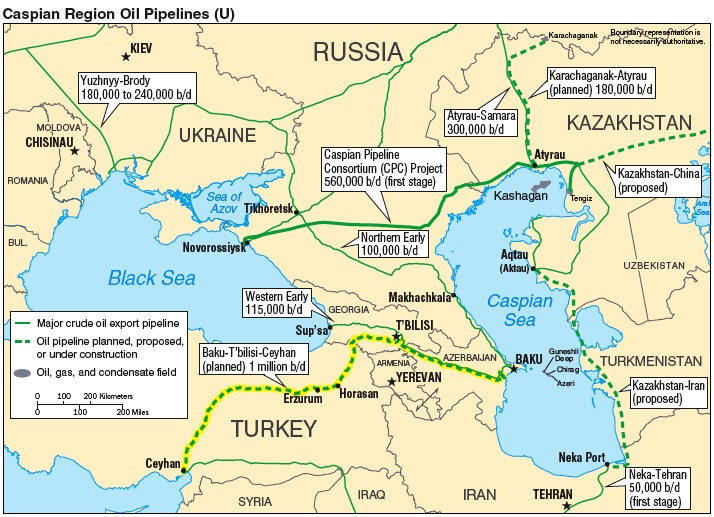
According to this online article, one of the countries that has a big potential in becoming a major player in the petroleum industry is Turkey. This assumption comes as a surprise considering that Turkey imports 90 percent of the oil and gas it needs. And although the country produces only 70,000 barrels of oil equivalent per day (boe/d) and has only 270 million barrels of proven oil reserves and 218 billion cubic feet of natural gas reserves, more and more major oil and gas companies are becoming interested in Turkey, primarily because of its untapped shale oil reserves, and its location—right in the middle of primary oil-producing regions, namely:

• To the north, the Black Sea, which is considered to be rich in oil;


Image Source: acus.org


• The Azerbaijani oil fields to the east;

• 27 billion barrels of onshore oil fields like Iraq’s Kirkuk field to the south; and

• To the west, the 22+ billion barrels of oil in the Ionian Sea, 4 billion barrels in the Northern Aegean Sea, 7 billion cubic feet of natural gas offshore Greek-held Cyprus, and 33+ trillion cubic feet of gas in the nearby Israeli waters.

In addition to Turkey being investor-friendly, it has a huge web of pipelines, refineries, and export terminals.


Image Source: thewashingtonreview.org


Dr. Ali Ghalambor has co-authored the book Petroleum Production Engineering: A Computer-Assisted Approach to explain the entire process of petroleum engineering. More about his work can be found at this Twitter page.