Showing posts with label EPA. Show all posts

Saturday, November 16, 2013

Draft on climate change adaptation plans up for public review


Image Source: news.thomasnet.com


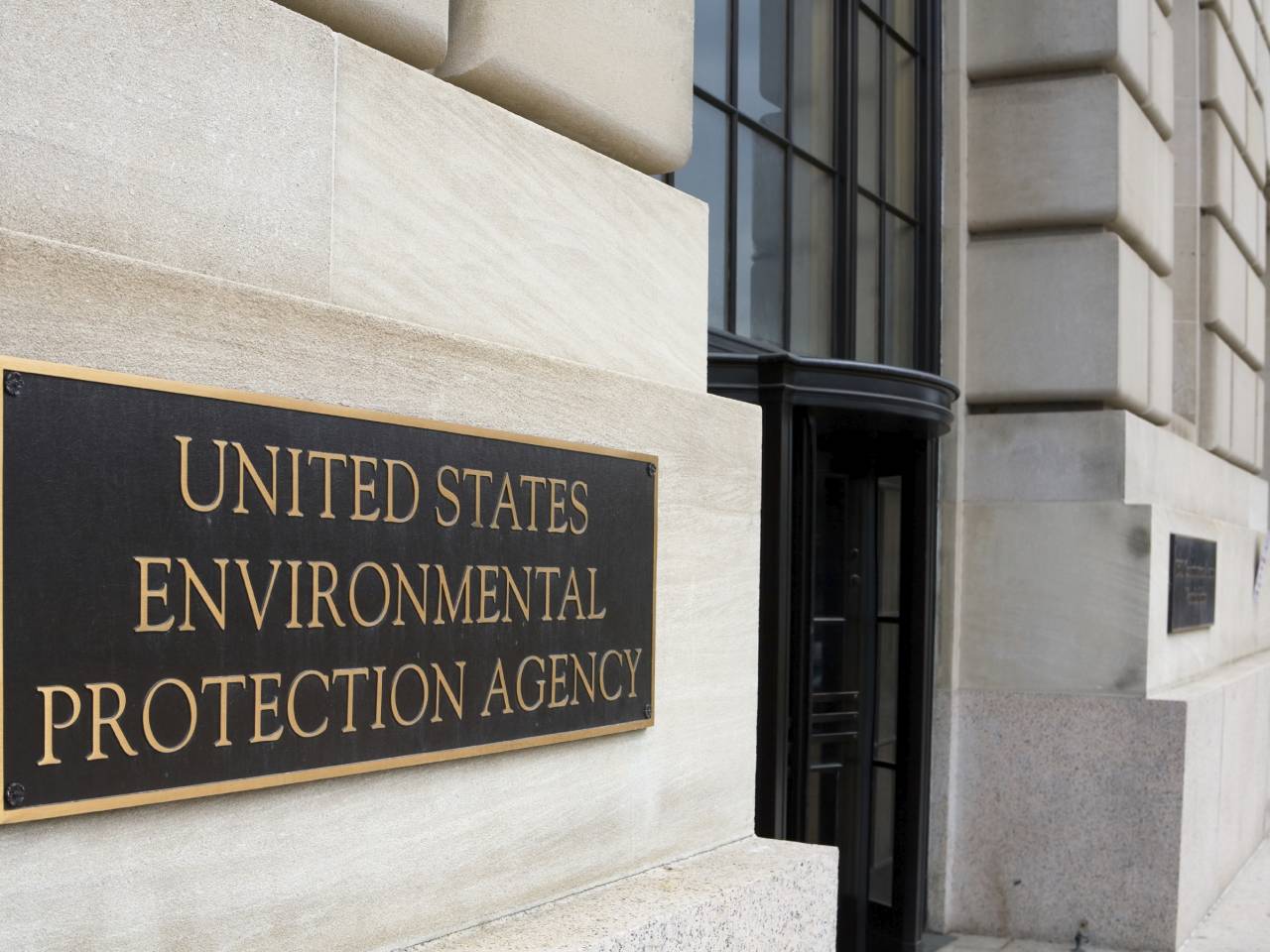
The United States Environmental Protection Agency (EPA) has started distributing the draft of its climate change implementation plans for review of the public, according to an article at ogj.com. The agency has set a schedule of two months or until January 14, 2014 for the review.

This policy review is in line with the requirement for all federal agencies to develop their own climate adaptation plans as ordered by the interagency Federal Climate Change Adaptation Task Force. The task force was convened under the power of Executive Order 13514 of 2009. Its mandate is to take into consideration all of the plans and develop recommendations for the US President on how the country can better endure this global phenomenon.


Image Source: treehugger.com


The draft details the processes by which the agency intends to implement in order to help communities at the grassroots level adapt to the realities of climate change.

EPA Administrator Gina McCarthy said that the agency must work to incorporate its climate plans towards its “programs, policies, rules, and operations to ensure that the agency’s work continues to be effective even as the climate changes.” The said plans in turn have the potential to create an impact on the oil and gas governing policies across the entire US.


Image Source: examiner.com


Dr. Ali Ghalambor is a co-author of the Frac Packing Handbook. Read more views on the oil and gas industry on this Facebook page.

Saturday, October 12, 2013

Study disputes gas leak concern on fracking

Hydraulic fracturing, also known as fracking, is a process of extracting natural gas or oil applying pressurized fluid deep into the ground so that fractures in rocks will be formed. This process increases rock permeability, which provides pathways for natural gas or oil to move upward.

Image Source: geology.com

At a certain extent, hydraulic fracturing generates concerns and contestation within the country and around the world. Some skeptical individuals and organizations hold their ground until other alternative techniques come up.

For instance, many fear that drilling for shale gas causes huge amounts of gas leaks into the air. However, The New York Times presents a study that contests this. Conducted by the University of Texas and supported by the Environmental Defense Fund and nine petroleum companies, the study reinforces the uses and advantages of hydraulic fracturing, as advocated by several groups that stand strong on their belief that shale gas is a better energy source than coal.

Image Source: news4jax.com

The study showed that fracking makes significantly smaller leaks of methane gas than the Environmental Protection Agency had estimated and shale gas detractors had thought. Furthermore, it stated that 99 percent of methane gas that escapes from new wells is captured through containment measures.

While the researchers of the study expect questions of objectivity, petroleum experts believe that the research and its proponents are reputable and reliable.

Image Source: processingmagazine.com

The oil and gas sector holds an unending interest among oil professionals, such as Dr. Ali Ghalambor. Find more materials about the industry by following this Twitter account.

Saturday, October 5, 2013

EPA proposes greenhouse gas emission limits from new coal power plants

Image Source: salon.com


As part of the Environmental Protection Agency (EPA)’s efforts to help reduce greenhouse gas emissions in the US, it has proposed to set the first-ever limits on greenhouse gas emissions from new power plants.

NPR reports that EPA’s proposal was made to address climate change, push for a better economy, and deal with “the most significant public health challenge of our time.”

The proposal would make it hard for companies to build coal-fired plants, which have been the country’s main source of electricity for several years now. In addition, any new coal plant would be allowed to emit only about half as much carbon dioxide as an average coal plant expels.

While EPA’s intentions are noble and legally sound, several electric utility companies think otherwise. They argue that it would be too expensive to meet the proposal’s demands in keeping coal plants clean enough. Moreover, the available technologies for cleaning plants have not yet been commercially approved. It would take more than hundreds of millions of dollars to add to the already very high cost of coal power plants.


Image Source: inhabitat.com
 
One of the largest utilities, American Electric Power, says that customers won't go for the approval of this proposal. Nick Akins, the company’s president and CEO, says that if this proposal pushes through, companies would have to stop building coal plants and instead go for natural gas plants, which are cheaper. However, they would also be “vulnerable to future spikes in natural gas prices.”

For the meantime, environmental groups are closely checking on the proposal to see how conscientious the government is in implementing strict rules over coal plant clean-up.

Whatever the argument is, power plants must do their fair share in stopping the ill effects of carbon pollution for the good of humanity and the environment.


Image Source: unjobs.org

For those interested in learning more about sustainable energy from Dr. Ali Ghalambor, this Facebook page serves as a useful resource.

Tuesday, August 6, 2013

EPA conducts a study on the potential impacts of hydraulic fracturing on drinking water


Natural gas has a vital role in the world’s pursuit of clean energy. The United States is home to several reserves of commercially viable natural gas exploited through horizontal drilling and hydraulic fracturing technologies, which allow access to gas in shale formations. This accessibility allows for a vast number of uses for natural gas varying from domestic benefits, power generation, transportation, fertilization, to manufacturing.


Image Source: news.nationalgeographic.com


The United States Environmental Protection Agency (EPA) hopes to frame the current clamor for natural gas in terms of boosting the economy, laying out energy security, and keeping it friendly towards the environment and public health. In doing so, it works with stakeholders to make sure that gas extraction proceeds according to environmental standards and laws. Among such efforts is the agency’s ongoing study to explore the plausible impacts of hydraulic fracturing on water resources. The research scope focuses on the full cycle of water use in hydraulic fracturing and the impact to drinking water safety of each step of the process.


Image Source: energy.korea.com


The study’s progress report was released in December 2012. While this progress report summarizes the details of the study, it does not present conclusions yet on the impacts of hydraulic fracturing on drinking water safety. Congress awaits the definitive results of the study in 2014.

EPA has worked with stakeholders and industry leaders so that the study would be based on contemporary hydraulic fracturing practices and trends.


Image Source: michiganlcvedfund.org


The ‘Natural Gas Engineering Handbook’ authored by Ali Ghalambor and Boyun Guo, illustrates more concepts about natural gas production. For more information about the subject, follow this Twitter page.

Thursday, May 23, 2013

Methane and the environment: The EPA on shale gas production


Image Source: 2b1stconsulting.com


For years, the oil and gas field has been thinking that the Environmental Protection Agency (EPA) would limit shale gas production due to harmful emissions. But recent developments have shown that heat-trapping emissions from the production of shale gas, like methane, are much less than what experts originally thought.

The EPA has released an annual report on greenhouse gas emissions, stating that greenhouse gas releases decreased by 1.6 percent from 2011 to 2012. The reduced emissions were attributed to fuel switching, tougher regulations, and better equipment. Warm weather and improvements in fuel efficiency of vehicles have also contributed to the decrease in such emissions.


Pie chart that shows different types of gases. 84 percent is from carbon dioxide fossil fuel use, deforestation, decay of biomass, etc. 10 percent is from methane. 4 percent is from nitrous oxide and 2 percent is from fluorinated gases.
Image Source: epa.gov


"The new EPA numbers show both that methane leakage was never as high as was previously thought, and that leaks are being reduced through better drilling practices,” Michael Shellenberger, president of California-based Breakthrough Institute, says.

The EPA’s focus is on methane gas since it is the most potent among all greenhouse gases. Fortunately, the amount of methane leaked into the atmosphere during a shale gas production has fallen, and the numbers continue to decline. Shellenberger affirmed this when he said that it’s reasonable to expect drilling possibilities to continue to improve, and that leakage rates will continue to go down.

“This should be treated as very good news by anyone concerned about climate change,” Shellenberger notes.


Image Source: nature.com


Get to know the latest in the oil and gas industry. This Ali Ghalambor Wordpress blog provides relevant updates.