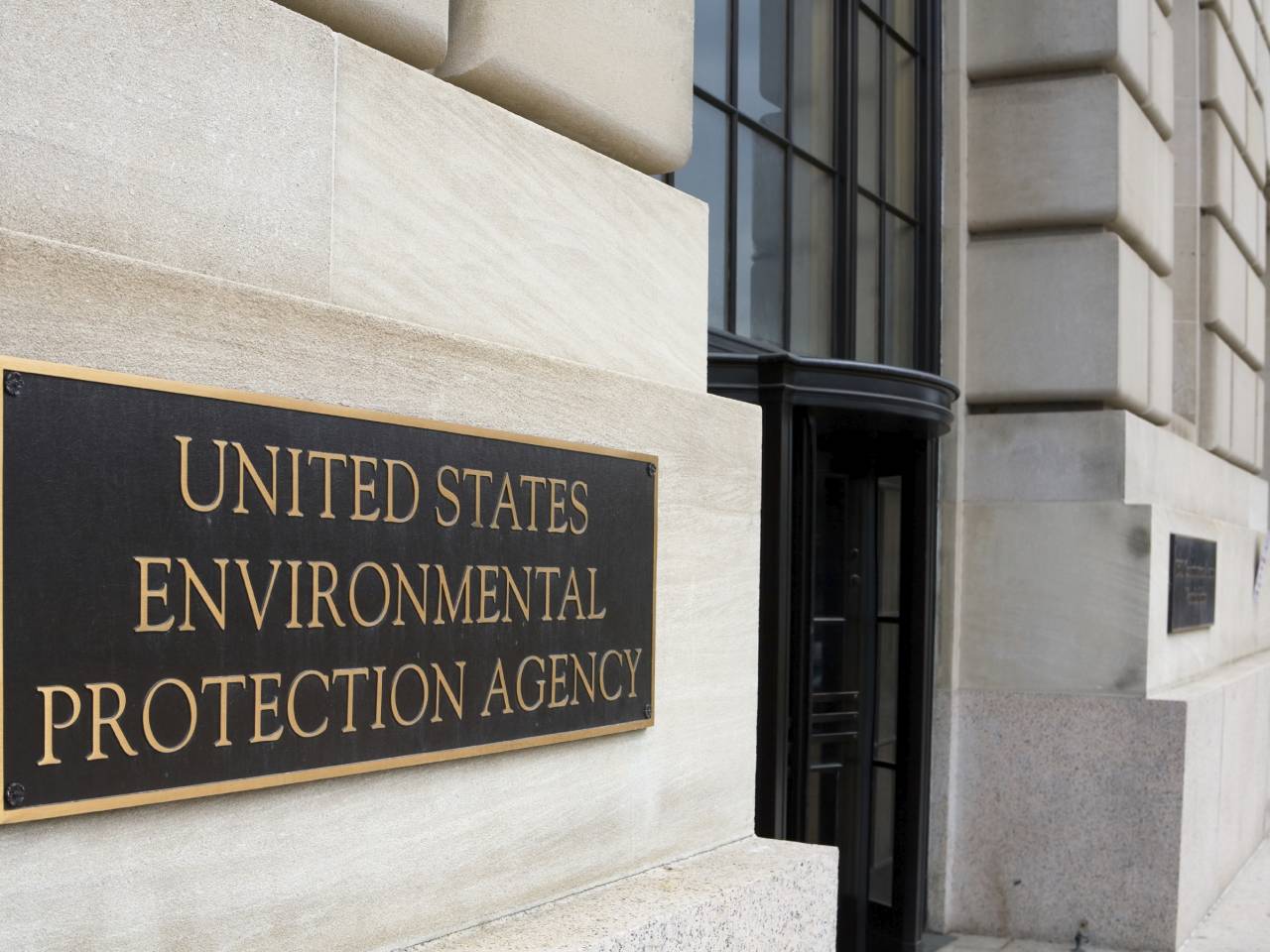
This New York Times article talks about the possible effects of Environmental Protection Agency’s proposal to tighten the sulfur contents on gasoline products.
THE Environmental Protection Agency’s latest proposed tightening of limits on sulfur in gasoline, and its previous rules, will most likely have the perverse consequence of retarding the development of cars running on batteries, advanced biofuels or hydrogen — all promising but expensive technologies that have not become mass-market products.
At the least, domestically produced gasoline and rapid advances in technology to make the internal combustion engine more efficient are likely to help the conventional automobile survive against competition from vehicles powered by electricity, natural gas and other cleaner alternatives.
The E.P.A. last week announced its proposed new Tier 3 rules sharply reducing allowable amounts of sulfur in gasoline, which would help automobiles’ catalytic converters to capture more pollutants. Tier 1, the E.P.A.'s first set of rules, was established two decades ago, under the Clean Air Act of 1990. Tier 2 was a refinement in 2000.
The specifics of the regulatory rules are hideously complex, with restrictions phased in gradually and covering only a fraction of the new cars and trucks each model year. They are applied to several categories, including “heavy light duty truck” and “light duty truck.” But the overall picture is clear: pollutants that in the bad old days were measured in grams per mile are now measured in tenths or hundredths of a gram per mile. In Tier 3 they are measured in thousandths of a gram.
Francis X. Lyons, a former E.P.A. administrator for the Great Lakes region, said that the agency’s latest proposed limits on sulfur in gasoline “simply extends indefinitely the viability of traditional automobile engines.”
Obscured by all the numbers is that the various technologies promoted as alternatives to gasoline — batteries, fuel cells or natural gas — are now facing a refined internal combustion engine. The federal government in large part drove automakers toward engine improvements by requiring them to essentially double fuel efficiency by 2025.
At the same time, the federal government has established mandates for increasing amounts of renewable fuels in the gasoline mixture. While that mandate has not yet worked out on the schedule Congress intended, it is clear that gasoline — the product that federal and state governments have been hoping for a quarter-century to replace with a variety of alternatives — is actually a moving target.
Gloria Bergquist, a spokeswoman for the Alliance of Automobile Manufacturers, a trade association, compared the car to the person in Zeno’s Paradox who walks half the distance to an objective, and then half of the remainder, then half again of what remains. The person gets closer and closer but does not quite reach the end point, which in this case would be a car producing zero emissions.
“The alternatives are having a harder time keeping pace,” Ms. Bergquist said. “Once they were further ahead. Now it really is a horse race.”
The race is reflected in the E.P.A.'s mind-boggling terminology for clean cars. First there were Low Emission Vehicles, then Ultra Low Emission Vehicles. As the standards got even tighter, “ultra” was not enough, and there were Super Ultra Low Emission Vehicles. Then there were Zero Emission Vehicles, or ZEV, meant to be electrics, and then internal-combustion cars named, with no apparent sense of irony, Partial Zero Emission Vehicles.
The pursuit of an all-of-the-above strategy (a phrase popularized by President Obama but in practical use in the field of transportation energy and pollution since the early 1990s) assures that options will compete with each other, and not all will cross the finish line.
In the view of Mr. Lyons, the former E.P.A. official, the government can promote fledgling alternatives but not make them popular if the underlying technology is too expensive or inadequate to consumers’ needs. And among the technologies making strides are gasoline engines that are getting smaller, lighter and much more fuel efficient, he said.
Many environmental advocates, however, reject the idea that gasoline has an edge in a long-term competition with nonfossil fuels. Although environmentalists embrace the improvements in gasoline and the internal combustion engine, they say they are not meant to meet international goals to reduce greenhouse gas emissions by 80 percent by 2050.
“We still need to get to an electric-drive fleet to meet our long-term carbon goals,” said Luke Tonachel, the director of clean vehicles at the Natural Resources Defense Council.
He and other experts are still counting on a much greater penetration of electric vehicles, even if the vehicles have so far failed to become a mass-market product.
At the Union of Concerned Scientists, David Friedman, deputy director of the clean vehicles program, said that the Tier 3 proposal was a sign of success driven by the alternatives. “There is a long history of exactly this happening,” he said, recalling that when methanol was being promoted as a cleaner fuel the oil companies said, “'Hey, we can clean up our fuel, too.''
Something cleaner will have to be developed, he said, because one-third of Americans live in places that are out of compliance with federal air quality rules at least part of the time, partly because of tailpipe emissions from cars and trucks.
In the meantime, he said, the competition was driving some air improvements. “You can connect the zero-emission vehicle mandate to the Tier 3 standards we see today,” he said. “ZEV set the long-term bar, and the auto industry innovated until they could meet some of those standards, and that’s where we got Tier 3.”
Follow this Dr. Ali Ghalambor Twitter page for more updates on the oil and gas industry.