Showing posts with label oil-drilling operations. Show all posts

Wednesday, January 2, 2013

Above barriers: Underbalanced drilling

Drilling operations do not stop; only the ways and means change overtime. Since foremost of the popular alternatives practiced today is underbalanced drilling (UBD), it is only fitting for all players involved to examine how this rapidly expanding trend is attracting an overwhelming amount of success and appreciation at the same time.

Image Credit: Energeia-ies.com


Underbalanced drilling technique is characterized by a wellbore pressure maintained lower than the formation pressure typically observed in drilling operations. Unlike the conventional drilling method which keeps wells to be drilled overbalanced, UBD technique is defined by that intentional lowering of hydrostatic head pressure. Primarily used to reduce formation damage, UBD technology answers the need to go around difficulties on drilling wells in mature, low-pressure reservoirs or sources where conventional drilling methods are no longer feasible.
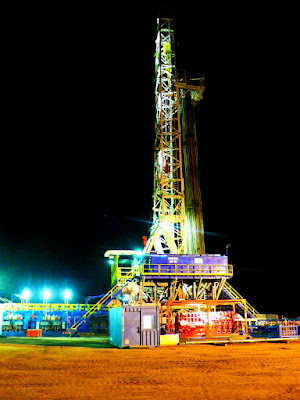
Image Credit: SimmonSedeco.com

Despite its popular use, underbalanced drilling is not a new phenomenon. It is said that similar methods are already being used several decades ago. While this technique has advantages, petroleum engineers like Ali Ghalambor know that continuous studies on the UBD application has to be made.

Image Credit: ArabianOilandGas.com

The increasing issue on oil depletion that causes consistent forms of panic is often a matter of perception on the lack or absence of solution. For the oil and gas sector, the issue really hinges on the requirement for alternatives. The UBD technique, despite its current limitations, is without doubt a groundbreaking achievement for an industry segment that rises above barriers.

For more related topics, follow this Twitter page.

Wednesday, December 26, 2012

Well productivity and the efficiency norm


Oil field operation has always been a complex, difficult process. Threats of formation damage are common occurrence if not a natural offshoot of improper system put in place. Any bad case within the bounds of that scenario typically streams back and affects well productivity. Thus, maintenance and prevention are necessary courses of actions.


Image credit: ipxint.com


While proper execution of drilling and completion operations and good management of the whole production is a first best step, the maintenance and damage prevention aspects must be made on the realm of ordinary procedures. Ever since well productivity gained the well-deserved attention from oil drilling operators, petroleum engineers constantly work on designing better, more efficient operational protocols for oil and gas field production system. Industry experts like Ali Ghalambor, whose publication of the important “Well Productivity Handbook: Vertical, Fractured, Horizontal, Multilateral, and Intelligent Wells” provided significant resources for students and field practitioners alike on well productivity, recognize the importance of oil and gas field development plans.


Image credit: swetanggoti.files.wordpress.com


Well productivity may be summed up into several things--optimized operations, improved efficiency, and even cost-effective solutions; but it is always about two things: productive maintenance and prevention. In oil and gas drilling and completion operations, any type of damage to well productivity is costly and crippling. Like in any field, either it is contained or failure becomes the norm.


Image credit: landsds.com


For more on the oil and gas industry, follow this Twitter page.

Tuesday, December 18, 2012

Weighty issues on well productivity


Though always overshadowed by the economic and political side of the oil industry, the technical aspects that pertain to oil-drilling operations have its share of weighty issues that need to be brought, even once in a while, into the open. It boils down to one thing—well productivity.


Image credit: en.wikipedia.org


Throughout the many decades since the oil boom started to define a new global age of progress, well productivity always has a progressive form—different ages, different methods, different approaches, and different views. Well productivity only points to a single concept—improvement; others prefer the term “efficiency.” For the current crop of seasoned petroleum engineers like Ali Ghalambor, it must be a guarded and consistent form of efficiency. Gone are the days when cost-affectivity must only be the sole aim. When the price of oil, for example, dropped many years ago, productivity damage was deliberately ignored over the need to minimize production costs. Over the years, the instability of oil production and the skyrocketing price of oil in the market fortunately made well production and damage prevention an utmost priority.


Image credit: caribbean360.com


Amidst the glaring hues of issues and conflicts typical of a dynamic oil industry in the global stage, the weighty issues on well productivity lies on one certain need: keeping the steady supply of oil and gas resources throughout the world in safe and environmentally responsible manner. Any approach that veers away from that will just make things fall short.


Image credit: rossthomson.wordpress.com


For more related content, follow this Twitter page.